
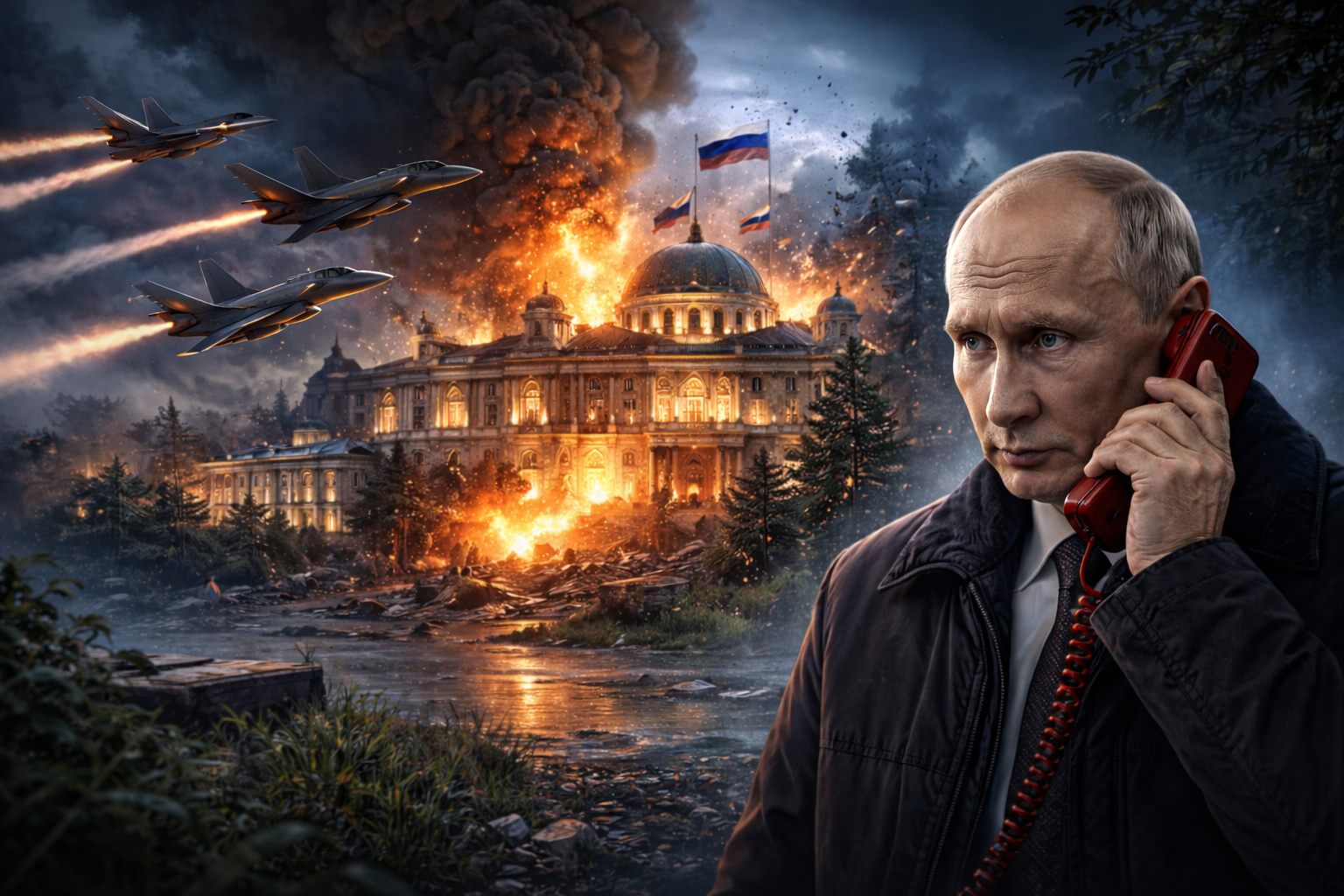
Russia is once again accusing Ukraine of crossing a dramatic red line, this time claiming that Ukrainian drones targeted one of Vladimir Putin’s state residences.
Ukrainian officials say the story doesn’t add up and warn it may be setting the stage for renewed attacks, including against Kyiv.
The accusation surfaced late on December 29, when Russian officials claimed that drones were launched toward Putin’s residence in the Novgorod region.
Moscow framed the alleged incident as a direct attack on the Russian president, language that immediately raised eyebrows given the lack of independent confirmation.
What Russia Is Claiming
Russian Foreign Minister Sergey Lavrov said Ukraine allegedly carried out a drone strike on Putin’s state residence overnight.
According to him, the incident would force Russia to reassess its negotiating stance, even as Moscow claims it still intends to remain part of diplomatic talks.
Lavrov went further, suggesting that Russia has already determined the timing and targets of a potential retaliatory strike. At the same time, Putin’s adviser Yuri Ushakov claimed the issue was raised during a phone call between Putin and Donald Trump.
Trump has not directly confirmed most of those details. The White House acknowledged that a call between Trump and Putin did take place, but offered no endorsement of Moscow’s version of events.
Ukraine Pushes Back Hard
Ukrainian President Volodymyr Zelenskyy dismissed the accusation outright, calling it another Russian fabrication. He warned that such claims often appear just before Russia launches new strikes, particularly against government targets in Kyiv.
Zelenskyy said Ukraine has no interest in sabotaging diplomacy and accused Moscow of using dramatic accusations to justify further military escalation while avoiding meaningful steps toward ending the war.
“This looks like a setup,” Zelenskyy said in essence, arguing that Russia is creating cover for future attacks rather than responding to a real incident.
Ukraine’s Foreign Ministry Response
Ukrainian Foreign Minister Andrii Sybiha echoed that view, saying Russia’s claims are designed to manufacture a pretext for escalation. He stressed that Ukraine targets only legitimate military objectives and only in response to Russian strikes.
Sybiha also pointed out that Russia has already struck Ukrainian government buildings in the past, including Kyiv’s Cabinet of Ministers, undermining Moscow’s attempt to portray itself as a victim in this case.
The Story Doesn’t Quite Line Up
One of the biggest problems with Russia’s narrative is internal consistency. Russia’s Defense Ministry reported that 89 drones were intercepted across several regions on the night in question.
Lavrov, however, claimed that 91 drones were headed specifically toward Putin’s residence.
Those numbers don’t match, and neither do the locations. Russian officials said drones were intercepted over multiple regions, including Bryansk, Rostov, Smolensk, Krasnodar Krai, and even over the Sea of Azov.
That wide geographic spread makes a focused strike on a single residence harder to square.
Trump’s Mixed Signals
Trump later said Putin personally complained to him about the alleged incident, calling it “not good” and referencing Tomahawk missiles in a broader discussion about escalation.
Notably, Trump initially said he had only just heard about the situation and didn’t have details, before later saying Putin had told him directly.
The mixed messaging has added to the uncertainty rather than clearing it up.
Where the Residence Is Located
The residence at the center of the claim is known as Dolgie Borody, often referred to as the Valdai or Uzhin residence. It sits in Russia’s Novgorod region, roughly 20 kilometers from the town of Valdai.

In recent months, Russia has significantly increased air defense systems around the site. Reports indicate the number of air defense units grew sharply after a drone previously passed near the area during an unrelated strike on fuel infrastructure in 2024.
The Bigger Picture
Whether the alleged attack ever happened may be beside the point. Ukraine’s leadership believes the accusation is less about facts and more about timing. Historically, Russia has often paired dramatic claims with follow-on military actions.
For now, there’s no independent evidence supporting Moscow’s version of events. What is clear is that the rhetoric is escalating again, and both sides appear to be bracing for what comes next.
In this war, accusations often travel faster than confirmation. The real test will be whether this claim is followed by another wave of strikes, or quietly fades once its purpose has been served.




Leave a Reply