
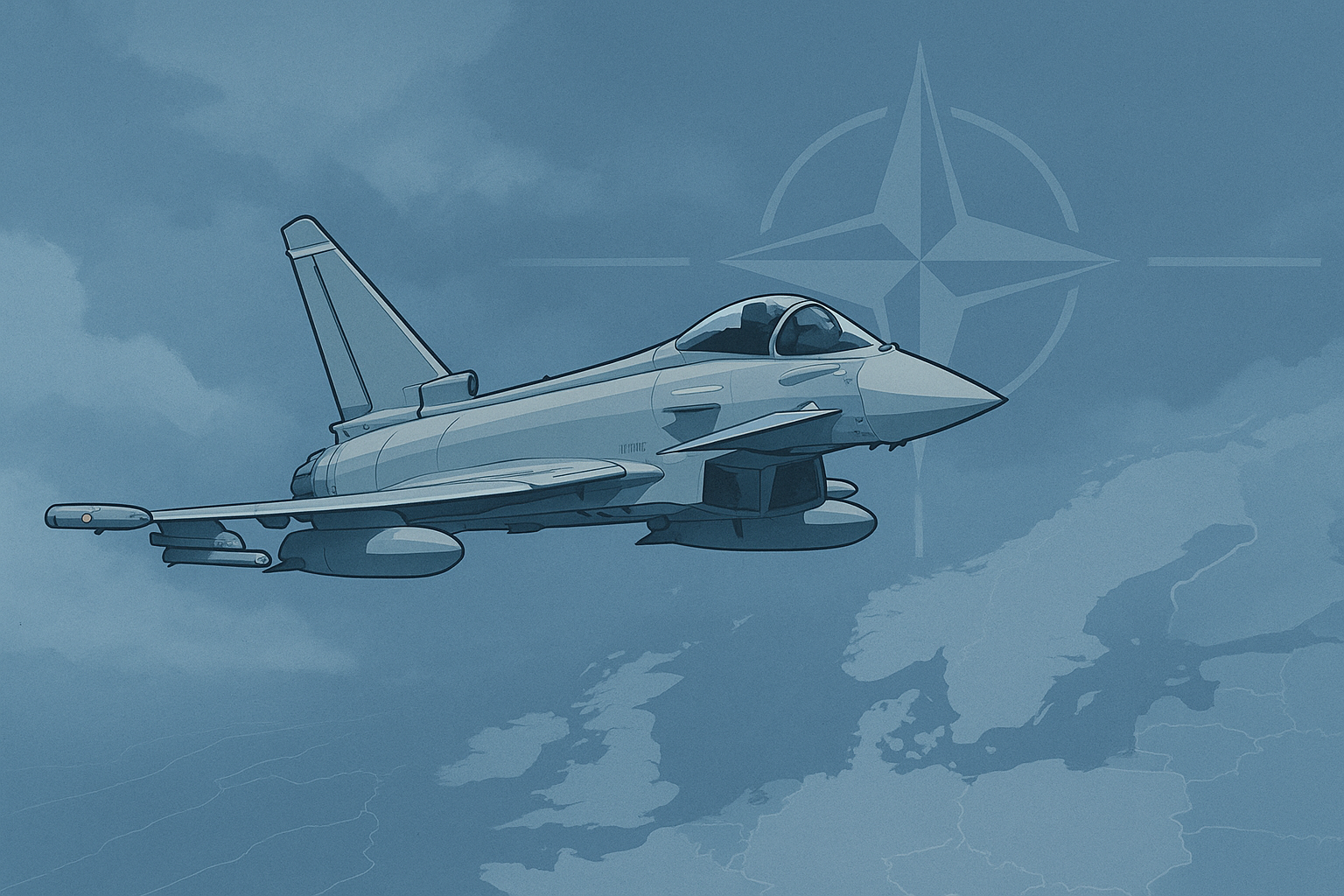
Germany is shifting more of its air force assets closer to Russia, marking another step in Europe’s expanding defensive posture as the war in Ukraine continues to reshape the continent’s security landscape. Berlin’s decision reflects growing concerns across NATO that the conflict could spill into wider instability if deterrence measures are not strengthened.
According to the German Defense Ministry, four Eurofighter jets have been deployed to the Laage Air Base in northern Germany to reinforce air-policing missions across NATO’s eastern flank. The move is part of a broader effort to increase readiness and reduce response times should Russian aircraft test alliance airspace.
These deployments also support Germany’s participation in NATO’s Air Shield program, which stations air-defense systems, radar assets, and fighter jets in strategically positioned locations from the Baltics down to the Black Sea. While Germany has been a consistent contributor to the mission, the accelerated timeline of this deployment highlights shifting threat assessments within Europe.
What Germany Says About the Move
Berlin emphasizes that the redeployment is purely defensive and aimed at reinforcing NATO obligations. German officials have stressed that they are not seeking confrontation but preparing for a security environment that has become more unpredictable since Russia’s full-scale invasion of Ukraine in 2022.
The Eurofighters will support both air-policing and quick-reaction alert roles, allowing Germany to respond rapidly to any airspace violations or suspicious movements near NATO borders.
Why This Matters for Europe
The move comes as NATO countries, especially those closest to Russia, call for stronger deterrence measures. Finland and Sweden’s entry into NATO shifted the alliance’s northern security calculations, extending the border NATO now shares with Russia and increasing the need for coordinated aerial monitoring.
Germany’s deployment fits into this evolving map and reinforces a trend:
Europe is no longer treating air defense as a static effort. Instead, it is becoming more flexible, mobile, and forward-positioned.
Growing Concerns Across NATO
Several factors have recently raised alarm across European capitals:
- Increased Russian military flights over the Baltic and Arctic regions
- Expanded drone and missile attacks in Ukraine with spillover risks
- Russia’s continued militarization of Kaliningrad, a strategic enclave between Poland and Lithuania
- Frequent probing of NATO air defenses, including transponder-off flights by Russian aircraft
These patterns have convinced NATO leaders that a more robust and forward-leaning air presence is necessary.
A Larger Strategic Shift
Germany’s latest deployment should also be seen in the context of its broader defense transformation. Since announcing the €100-billion “Zeitenwende” fund in 2022, Berlin has:
- Invested heavily in modernizing its air force
- Ordered F-35s to join its fleet
- Increased contributions to NATO’s high-readiness units
- Deployed Patriot systems to eastern allies
This shift represents a major reorientation of Germany’s post-Cold War defense strategy — moving from restrained participation toward active leadership within NATO’s defensive ring.
What Comes Next
NATO air-defense drills are expected to increase through early 2026, and Germany will play a central role in coordinating air-response infrastructure. European analysts suggest more jet rotations may follow, particularly if tensions continue to rise or Russia escalates air activity around NATO borders.
For now, Germany’s new Eurofighter deployment sends a simple message:
Europe is reinforcing its air shield, tightening coordination, and preparing for a long-term security challenge.




Leave a Reply