
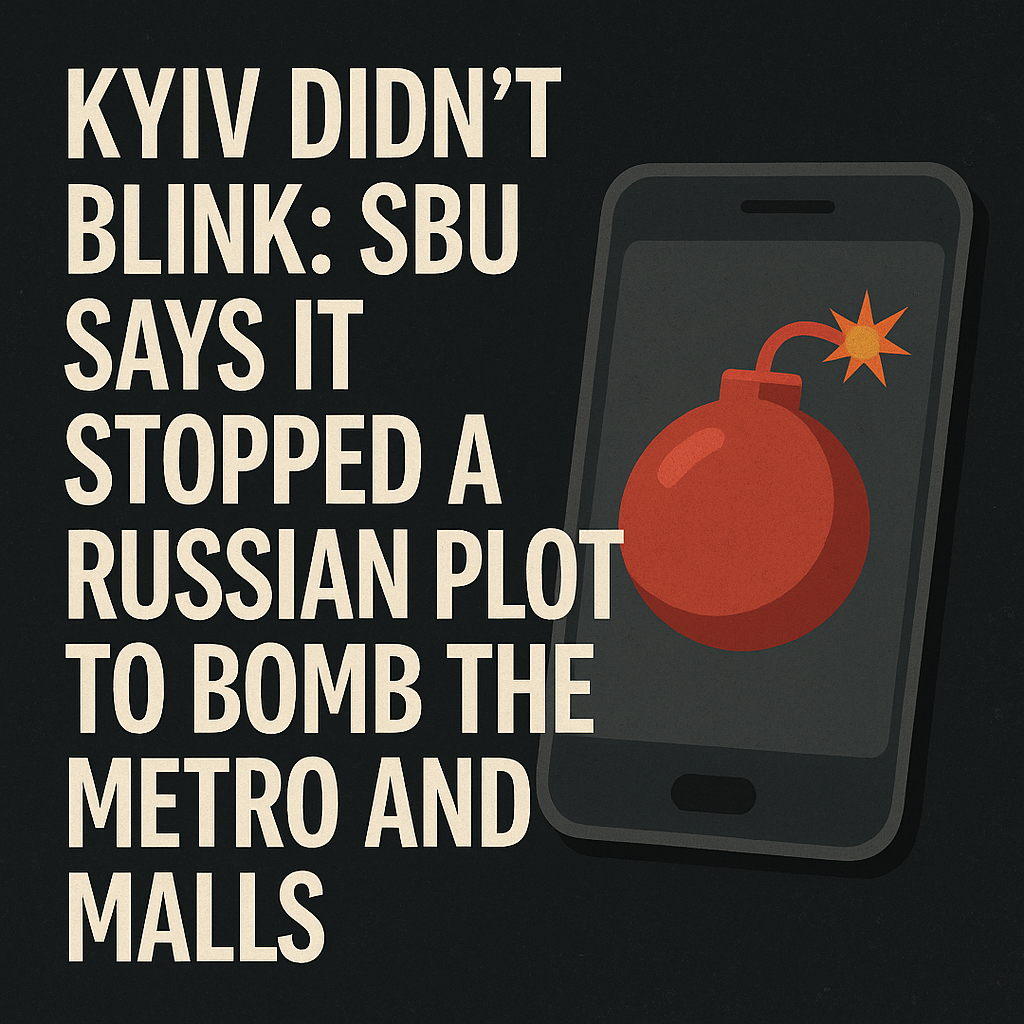
Phones as detonators, a Makarov from a dead drop, and a hit list—Ukraine’s security service says it caught the plan before rush hour did
Nov. 12 — Moscow tried to turn Kyiv’s commute into a morgue. Ukraine’s Security Service (SBU) says it foiled an FSB-directed plan to blow up a Kyiv metro station and multiple shopping centers, with a bonus contract killing to send a message.
The organizer?
A 55-year-old Crimean resident who flipped to the FSB after 2014 and allegedly built a small agent network—one recruit even slipped into Kyiv through a third country to fetch a Makarov pistol from a cache and prep cell-phone-triggered IEDs for rush hour.
The goal was simple and ugly: panic first, then politics.


Here’s the part that should make Kremlin apologists choke on their talking points: investigators say the team had clear instructions for improvised explosives and target sets inside the capital’s most crowded civilian spaces. That’s not “special operation.”
That’s terrorism with a spreadsheet. The SBU says it rolled up the plan before execution, documenting the Kyiv agent’s chats with the handler in occupied Crimea.
Charges on the table: high treason, terrorist act, and illegal weapons. The handler sits in occupied territory—for now. The rest of the network is being hunted.
And no, this isn’t a one-off fever dream. It fits a long, unlovely pattern: when missiles, glide bombs, and drones don’t crack a city’s will, try cheap terror.
Russia’s services have shopped this tactic before—from car bombs to café bombs—while Ukraine’s counterintelligence has answered with raids, stings, and, when necessary, the final option.
(You might remember the mid-July case when suspected FSB assassins tied to a Kyiv killing were neutralized after resisting arrest outside the capital. Same playbook, different chapter.)


Let’s say the quiet part out loud: phones-as-detonators at rush hour is not “pressure.” It’s the state-sponsored targeting of civilians. That’s the line international law codified ages ago, and it’s the line the Kremlin keeps sprinting past with a smirk.
Kyiv’s answer today? You don’t get to turn our subway into theater. Not while the SBU is reading your stage directions in real time.
If you’re looking for the strategic read: this is about narrative warfare as much as body counts. The metro is a civic metronome; you terrorize that, you try to stop a city’s heartbeat.


The malls are the weekend—families, teen jobs, grocery runs. Hit both and you don’t just scare people; you fracture daily life and dare the government to look weak.
Today’s outcome flips that script. Kyiv gets to say: we saw it coming; we shut it down; go crawl back to your handlers.
Three tells to watch next (and I’ll be watching them with you):
• Arrests and video: SBU loves receipts; expect footage of the cache site or surveillance grabs if releasing them won’t burn sources.
• Explosive recipes & parts sourcing: where the phone-trigger kits and explosives were meant to come from (domestic vs. cross-border). If we see import routes, that points to a larger node.
• Follow-on raids: if this cell was part of a wider Kyiv-area network, there’ll be more doors kicked in before the week’s over. Past cases suggest the SBU doesn’t stop at one hub.

Verification note: Details are drawn from the SBU announcement and aligned independent reports (United24 Media, RBC-Ukraine, Kyiv Independent/NV), which concur on the metro/malls target set, cell-phone IED method, Makarov cache, Crimea-based handler, and treason/terror charges in absentia. Public specifics can shift as arrests roll up, but the core plot contours match across outlets.



Leave a Reply