
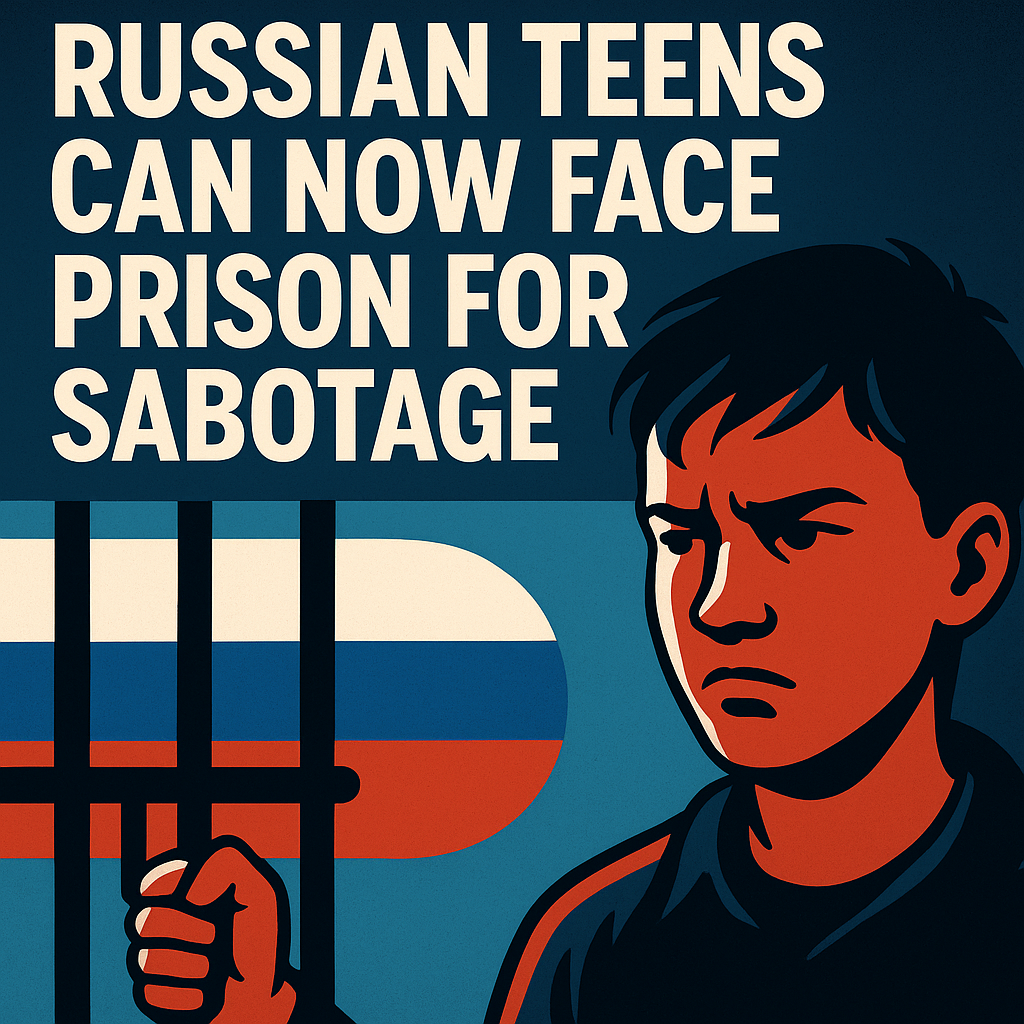
Russia just moved the goalposts and dragged kids onto the field. The State Duma approved changes that allow courts to lock up 14-year-olds for “sabotage” and a wide slate of related offenses. That means teenagers can now face criminal liability not only for carrying out sabotage, but for “aiding,” “training,” “organizing a group,” or simply “participating” in one. Wrap that in terrorism language, and the law’s net gets even wider.
Here’s what actually changed.
First, the penalties. Lawmakers didn’t just lower the age; they tightened the screws. Cases tied to sabotage lose statutes of limitations, judges are barred from sentencing below the minimums, parole gets harder, and suspended terms are off the table for anyone labeled part of a “sabotage community.” Recruit a minor into sabotage or terror? The statute points up to life imprisonment. That is a very loud signal to prosecutors—and an even louder one to defense lawyers.
Second, the practical targets. These provisions have been used most often in cases linked to rail arson and other hits on infrastructure—exactly the kind of actions Russia has blamed on “saboteurs,” including teenagers. It tracks with months of reported fires and explosions at railway nodes and depots from Bryansk and Rostov up to Murmansk, with similar incidents in occupied Crimea and Luhansk. Whether you call it a partisan campaign or a string of criminal acts, the battlefield logic is obvious: disrupt trains, you slow the Russian war machine.
Third, the politics. Lowering the age to 14 isn’t just about deterrence—it’s about narrative control. Moscow gets to say it’s “cracking down on terrorism,” and security services get a sharper tool to scare off would-be helpers (or to make examples of the unlucky). But there’s a cost: you risk criminalizing adolescence, chilling speech, and handing investigators a broad pretext to scoop up kids for “training” or “aiding” based on thin evidence.
For Ukraine, this is a backhanded compliment. If partisan actions are truly complicating Russian logistics, the Kremlin’s legal shift is an admission that the pressure is working. For communities inside Russia, it’s a warning: the state is prepared to treat a teenager with a fuel can like a national-security threat—and to sentence accordingly.
This isn’t just a legal tweak. It’s a wartime posture that fuses security, propaganda, and fear. By dragging the threshold down to 14 and locking in harsher terms, Russia is betting that tougher laws will outpace the sparks on its rail lines. Whether that stops the fires—or just drives resistance further underground—will show up in the smoke and the timetables.




Leave a Reply