
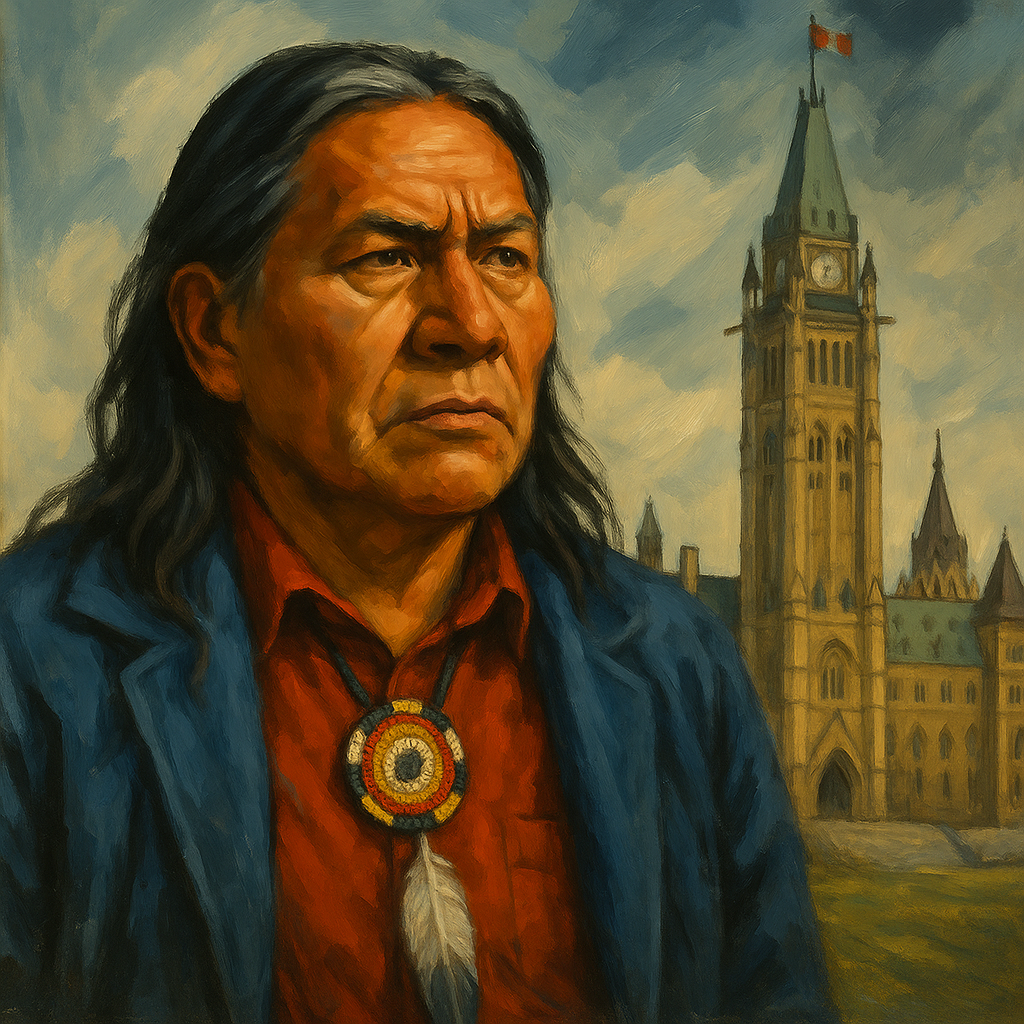
Prime Minister Mark Carney’s first federal budget is getting serious backlash from Indigenous leaders across Canada — not for what’s in it, but for what’s missing.
While the 2025 budget includes a few new investments in infrastructure and clean water, Indigenous organizations are sounding the alarm over the lack of guaranteed funding for core reconciliation programs — programs that help deliver education, health care, and essential services in Indigenous communities across the country.
And for many, it’s raising fears that Canada’s commitment to reconciliation is starting to slide backward.
Key Reconciliation Programs Left in Limbo
A chart in the budget’s annex on “Indigenous Reconciliation” has been making the rounds on social media since the document was released Tuesday. It shows that several key programs — including on-reserve education, First Nations and Inuit children’s wellness, emergency management, and urban Indigenous programming — only have funding secured through spring 2026.
After that, the columns turn to zeros.
That uncertainty has left many Indigenous leaders furious and deeply concerned.
“I’m absolutely concerned,” said Assembly of First Nations (AFN) National Chief Cindy Woodhouse Nepinak, who represents more than 600 First Nations chiefs across Canada.
Woodhouse Nepinak said she was told that the programs are technically “sunset programs” — temporary initiatives that require renewal — but she’s not taking that as reassurance.
“I am going to ask the Prime Minister’s Office today: What is exactly being cut?” she said.
Inuit and Urban Programs at Risk
One of the most alarming examples is the Inuit Child First Initiative, which ensures Inuit children get equal access to essential services without delay — a vital tool to address long-standing inequities in northern health and education systems.
But the program is slated to expire in March 2026, and the new budget provides no additional funding to keep it alive.
Natan Obed, president of Inuit Tapiriit Kanatami (ITK), said Inuit leaders are running out of patience.
“We’ve been trying to do this in good faith with the government, but if Inuit are not receiving equitable care and opportunity, there are legal ramifications we can pursue,” he said.
In other words: if the federal government won’t fund these commitments voluntarily, Inuit leaders may take it to court.
The Urban Programming for Indigenous Peoples, another initiative left unfunded beyond 2026, supports friendship centres across the country — a lifeline for urban Indigenous people. These centres help with housing, employment, food security, childcare, and mental health.
Without renewed federal support, those services could be forced to scale back or shut down altogether.
“These critical services are at risk,” the National Association of Friendship Centres warned in a statement.
“The federal government is breaking its promise to Indigenous people by cutting funding to the program.”
Ottawa Says the Programs Aren’t Ending — Just “Evolving”
Indigenous Services Minister Mandy Gull-Masty responded to the growing concern, saying the programs aren’t being eliminated but rather “modernized.”
“There are some things in this budget that were misunderstood as zeros. That’s not the case,” Gull-Masty told CBC Indigenous.
“It’s about us identifying outcomes and aligning programs with community priorities.”
But Indigenous leaders say that without hard funding commitments, those reassurances ring hollow.
After all, “modernization” often sounds like a euphemism for budget cuts.
The Budget’s Mixed Bag
While reconciliation advocates are alarmed, the Carney government points to several other investments that do benefit Indigenous communities — just not the ones at risk.
The budget includes:
- $2.3 billion for safe drinking water on First Nations reserves.
- $10.1 million for Indigenous consultations on major infrastructure projects.
- A cap on spending cuts for Indigenous departments, limiting them to 2% per year.
That last point matters — because even with the cap, Indigenous Services Canada (ISC) will still lose about $500 million annually, and by 2030, total cuts could reach $2.3 billion.
So, while the budget prevents deeper reductions, it still forces departments to tighten their belts significantly.
Natan Obed cautiously welcomed the spending cap and the new $1-billion Arctic Infrastructure Fund, but said major concerns remain.
“We’ve been told that some items will be considered in the spring update,” he said. “But that’s not how the government usually handles rights-based initiatives. These are worrying trends.”
Mixed Reactions Across Indigenous Communities
Not all Indigenous voices were critical. The Manitoba Métis Federation (MMF) praised the budget for aligning with its own infrastructure priorities.
“When we look at this, this really aligns with our priorities,” said Anita Campbell, the federation’s finance minister. “We have shovel-ready projects that play to our strengths as a government.”
Meanwhile, Métis National Council President Victoria Pruden took a more cautious stance, calling the government’s commitments to reconciliation “lukewarm.”
“This budget doesn’t reflect the depth of commitment that we’ve heard in certain moments over the past six to nine months,” she said. “And yeah, it is deeply concerning.”
A Bigger Question About Priorities
The tension surrounding the budget reflects a bigger question: how serious is the Carney government about reconciliation when faced with mounting fiscal pressures?
With an expected $78 billion deficit this year — the largest non-pandemic shortfall in Canadian history — the Liberals are clearly trying to tighten spending. But Indigenous leaders say reconciliation can’t just be a “nice-to-have” that disappears when budgets get tough.
“If this is about fiscal restraint, then Indigenous children and communities shouldn’t be the ones paying the price,” one First Nations leader told CBC.
For many, the zeros in those budget tables don’t just represent funding gaps — they represent broken trust.
Mark Carney’s first budget was supposed to be about boldness — about building a stronger, fairer economy for the future. But for Indigenous leaders, it’s becoming a symbol of unfinished promises.
Programs that have helped Indigenous children access care, families stay housed, and urban communities find stability are now facing an uncertain future. And while Ottawa insists they’re not being cut, no one can say how — or when — they’ll be renewed.
Until then, Indigenous communities across Canada are left asking: how can reconciliation move forward if the funding to sustain it is already running out?




Leave a Reply