
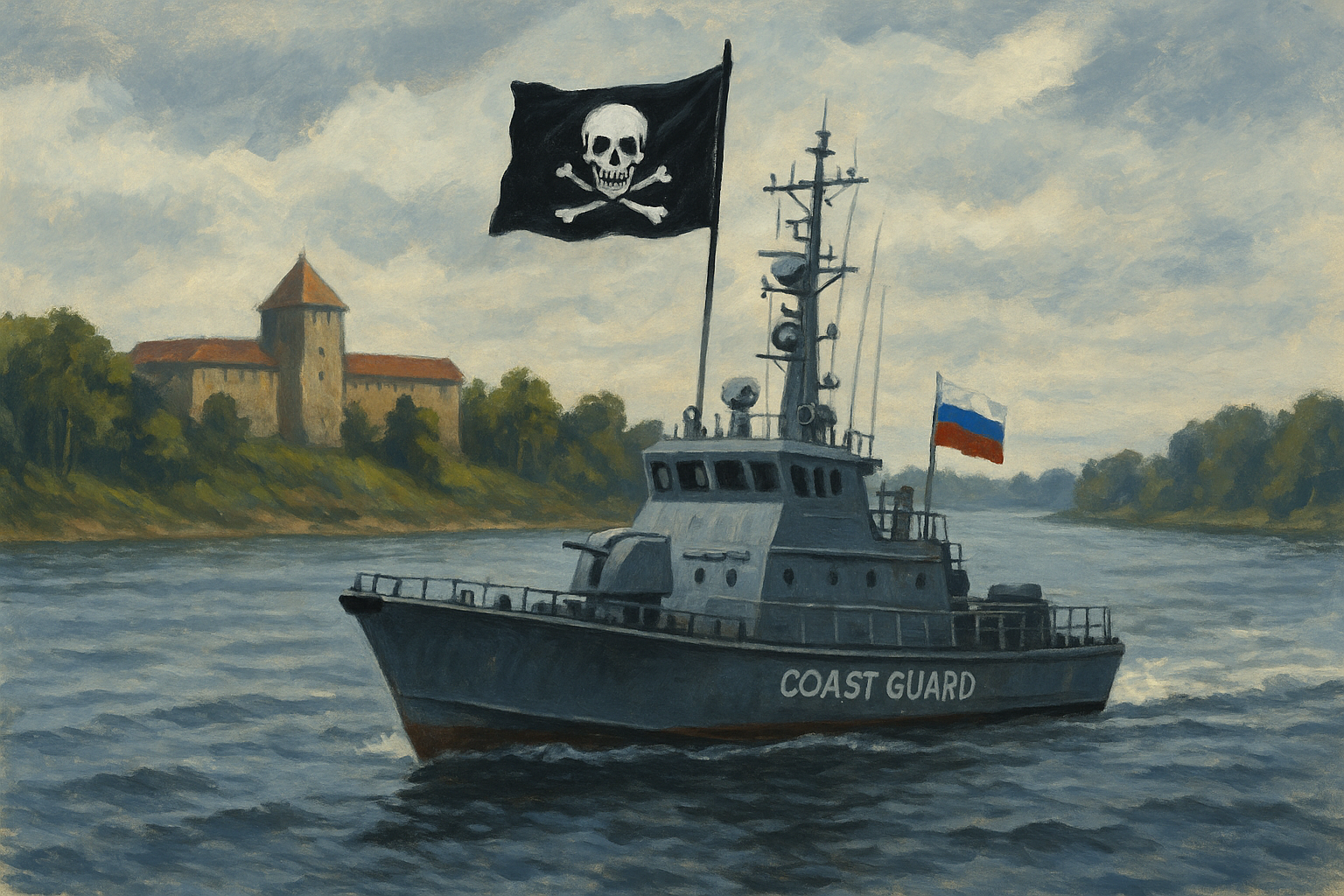
A Russian coast guard cutter patrolling the Narva River — the narrow stretch of water that separates Russia from NATO and EU member Estonia — was spotted flying the Wagner mercenary group’s flag on Nov. 2. Estonian authorities released the information publicly, calling the incident a blatant symbol of how Russia’s internal power structures are “fracturing” under the weight of the war in Ukraine and Western pressure.

What makes the moment so striking isn’t just the flag itself, but the history behind it. Wagner, once led by Yevgeny Prigozhin, was the Kremlin’s favorite deniable attack dog in Ukraine, Syria, and across Africa, before it turned its guns toward Moscow during the short-lived June 2023 mutiny. Two months later, Prigozhin was dead in a plane crash widely believed to have been an assassination, and the Russian state began absorbing what remained of Wagner’s forces into the Defense Ministry and FSB-controlled units. For Estonia, seeing the Wagner skull banner flying on a state vessel — not a rogue mercenary boat — sends one message: the Kremlin is using the legacy of Wagner when it suits them, even if the group is officially branded a terrorist organization in half of Europe.
Estonia’s Foreign Ministry even mocked the move, wondering aloud whether the “spirit of Prigozhin” was back to overthrow Moscow, or whether the crew simply couldn’t resist trolling the West. Ukraine’s Foreign Minister didn’t find it funny, calling the flag a symbol of “barbarism, war crimes, and chaos” now openly displayed on NATO’s doorstep. His reaction wasn’t just rhetorical — it was a warning that Moscow is testing the limits of Western tolerance using psychological pressure, theatrics, and symbolism instead of open conflict.
This isn’t the first time Estonia has been targeted with what officials call “gray-zone” provocations. In September, three Russian MiG-31 fighter jets crossed into Estonian airspace, forcing NATO fighters to scramble. In October, an unidentified drone was shot down over a base in southern Estonia housing allied troops. That same month, the brief closure of the quirky “Saatse Boot” border passage — a tiny piece of Russian land that locals normally walk through — was triggered after armed Russian personnel appeared just meters from civilians. One or two of these events could be dismissed as mistakes. A string of them is a message.
What Russia gains from this behavior is strategic ambiguity. A flag on a patrol boat is just provocative enough to be noticed, but not enough to trigger a military response. If NATO reacts strongly, Moscow smirks and says, “You’re afraid of a piece of cloth?” If NATO ignores it, Russia gets to normalize the idea that mercenary groups, war criminals, and state forces are all interchangeable parts of its military machine.
The Narva River is the perfect stage for this kind of theater. On one side: Estonia — democratic, pro-Ukraine, fully integrated into NATO and the EU. On the other: Russia — increasingly authoritarian, increasingly isolated, and now apparently willing to blur the line between its official armed forces and a group that once attempted a march on its own capital. A Wagner flag floating in that space is no accident. It’s a reminder that Russia plays by rules of its own invention, and expects the West to constantly guess which version of Moscow they’re dealing with — the rational state, the paranoid empire, or the gangster with a flag.
For Estonia, the lesson is simple: document everything, escalate nothing, and force Russia to own every stunt it tries to pass off as “a joke.” For Ukraine, the sight of the Wagner banner isn’t just offensive — it’s proof that Russia has no interest in pretending to act like a normal state actor anymore. And for NATO, it’s one more datapoint that the pressure on the alliance’s eastern flank isn’t easing — it’s entering a new phase, one where symbols and signals matter just as much as missiles and troops.
Whether the Wagner flag was a crew stunt, a sanctioned message from Moscow, or a bit of internal political theater, the takeaway is the same: the Kremlin is balancing aggression with instability, and its own myths are starting to leak out into the open. And now, one of those myths is flying on a boat facing the West.




Leave a Reply