
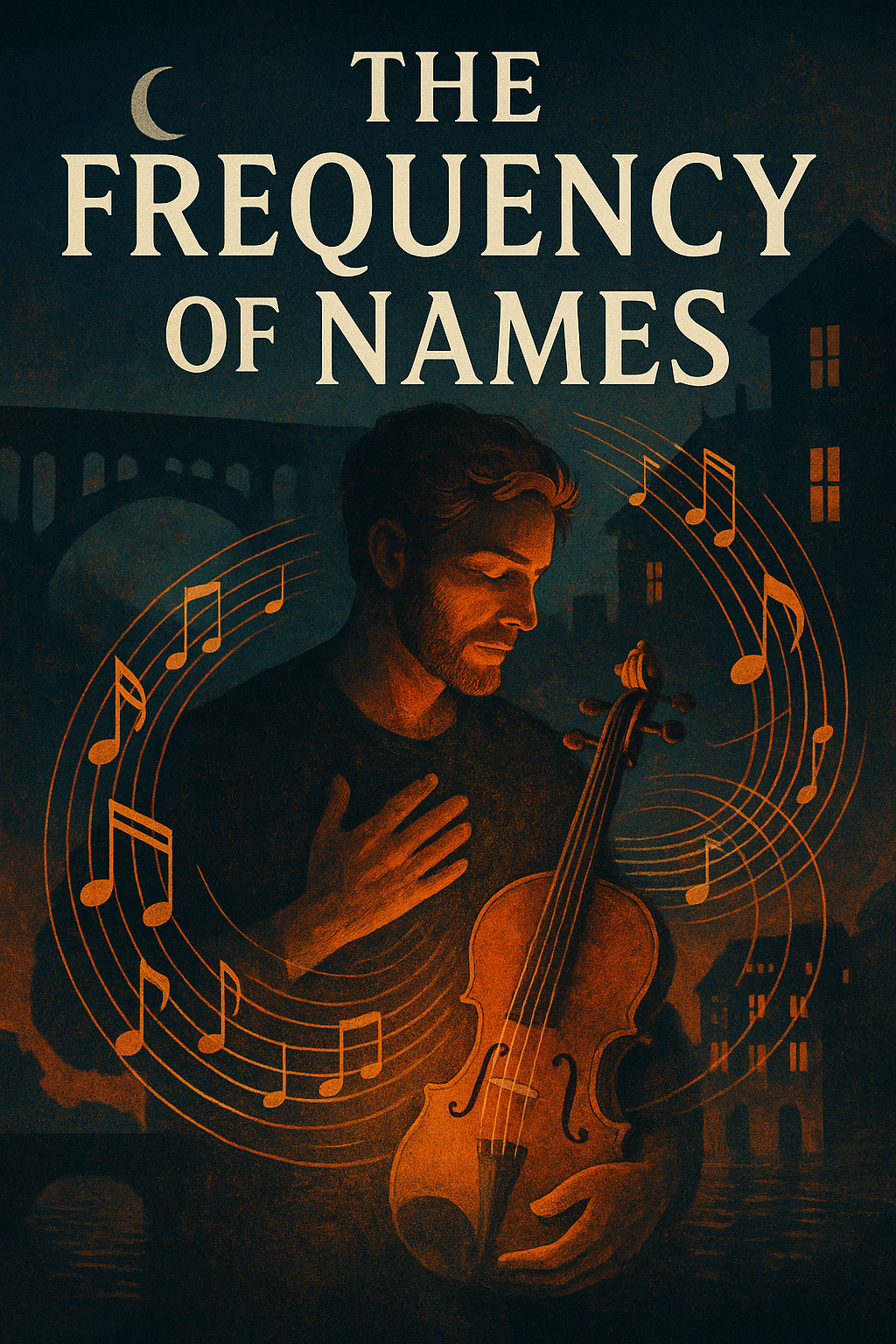
They teach you to listen with your bones first.
Not your ears—ears are beginners’ tools. Bones remember things ears are ashamed to speak aloud. The sternum drinks resonance, ribs cradle it, and the pelvis knows the old rhythms of work and want. You stand barefoot on the wooden floor of the Hall of Quiet, the boards cool and faintly damp with the city’s night-breath, and you let the world climb into you.
The old Master, Naima, taps a tuning fork against her palm and touches it to your collarbone. The tone unfurls like silk under water. E, your first note of the night. She says, “Don’t grab the sound. Let it find its own chair.”
Around you, the others of the Circle sway with eyes shut: dockworkers and tailors, a nurse with inked wrists, a mathematics professor who never learned to sleep, a woman whose wedding ring is on a necklace now. The Hall is just a repurposed ferry terminal, glass scarred by salt, rafters webbed with seized ropes and prayer flags. But when the lights are doused and the river hush pulls in close, the place becomes a throat. Everything hums through it.
Naima lifts a hand. “Remember: the world speaks in a chord. The chord is a sentence. And every sentence has a truth.”
You were thirty-one the first time you heard the chord by accident. It was not in a temple or a concert hall, not even in a good moment. You were hungover and alone, sitting on your apartment floor, cheek pressed to the cold metal of the radiator. Outside, a garbage truck brayed and sighed; upstairs, someone was practicing scales on a cheap keyboard. Your own blood throbbed in your ears with the thump and grit of a heart that had once sprinted clean but now only dragged.
It wasn’t music, not exactly. It was how the truck’s brakes fell into the neighbor’s left hand, how your pulse undercut them both in triplet time. The radiator, cooling, ticked one stubborn, perfect rhythm, and the building’s old bones carried a whine—the frequency of fatigue, of workaday patience. Together, for three breaths, every noise fell into agreement. The room turned toward you as surely as a flock will turn in air, and you felt, without metaphor or mysticism, that the city was addressing you.
You heard your name in it.
Not your government name. The other one. The one nobody says. The one you have tried to starve out and bury. It rose in the sound like a lifeline.
And then it was gone. A car horn cut across the phrase; upstairs, the keyboard fumbled a chord change. The radiator fell silent. You were left with your face against the radiator, crying in the way that breaks capillaries.
You thought you’d imagined it. But the next night at the late diner, the hiss of the griddle stitched to the shudder of the front door—that same turning toward you. On the third day, the wind all afternoon bullied the flag outside your building, and your bones knew how to answer.
You found the Hall of Quiet from a rumor a busker sold you for a pomegranate and a cigarette. They call you Listeners, the busker had said, smiling like he was giving you bad advice, and they don’t charge. They ask for attention and a decent pair of shoes.
Now you stand in the Hall with the others, tuned to E like lanterns set to the same flame. Naima paces, listening the way a stargazer tracks a known constellation. “There will be a phrase tonight,” she says. “There always is, if we are honest enough. Listen until it finds you.”
The night is a slow exhale. The river outside shoulders against its banks with winter weight. Pigeons dream-talk in the rafters. The ferry moorings creak. Somewhere in the neighborhood a radio plays—thin, as if remembered instead of heard. On the far end of the room, Tamsin, who sells oranges by the station, breathes on a clay flute. One long note, almost a whistle. A child’s toy. But not a child’s hand. She angles the tone until it threads through the ferry terminal’s old ironwork, until the iron sings along: harmonic ghost, fog-bell memory. The sound insect-crawls into your teeth and then, gentler, into your chest.
Naima never uses the word “God.” She says God is too loud a word for early work. She says use “source” if you must use anything; better yet, use nothing and stand still. She says: stay with the thing that is here, not the thing you want it to be. When she speaks, you always feel the taste of pennies and peppermint, an honest flavor, a winter flavor.
She taps you again. A. Your body receives the second flame. The two notes bloom into a third, a phantom in the air: the overtone that isn’t played but is implied. That, she likes to say, is where the truth hides: not in the notes, but in the ghost between.
You are not here to be saved. They told you that on the first night. The Circle is not a hospital or a cult. There’s coffee and there are chairs, but nobody will catch you if you fall. You are here because you have the suspicion that everything speaks, and that you have been way too proud to answer.
When the phrase comes, it comes from below. Not the river and not the wood. Lower. From underneath your life, where the scaffolds grow from bedrock. It shakes the old ferry slips and moans in the joists; it drags like a net. The Hall dips as if a large animal has settled on it, a tired, patient animal, dark fur wet with river. The room leans into a low D, and the chairs and bodies and flags agree like a jury that’s had enough argument. Your sternum opens like a door. You hear a sentence of the world.
The sentence is simple: Stay.
It is not romantic. It does not mean stay here in this room. It does not mean stay with this Circle or stay with Naima or stay with the person you have been. It means remain. Persist. Be stubborn in the presence of meaning. The sentence is a command and a plea and a promise. You feel how long the city has been saying it—to piers and fish and bent-backed men; to cranes and looms and sick children whose mothers sang to them in frequencies thin as needles.
Something in you answers back. Not out loud. Not yet. But you feel the reply begin in the meat of your hands and travel up to your jaw, where it waits behind your molars like a moth.
You go home on the night bus with your jaw clenched around that moth. Outside, late diners are half-lit; the streets have more room for their own bodies. The driver taps the steering wheel in five, a pattern that does not belong to the route. Your apartment smells like metal and citrus. You sit on the floor deliberately, back to the radiator like a pilgrim kneels toward a compass point, and you make yourself as still as a library. Then you unclench your jaw and let the reply out.
It is just one syllable, wordless, a tone you can almost see, a thin willow-switch of sound. Your radiator lifts to meet it. The windowpane joins with a soft ribboning whine. The room is not a room now. It is an instrument, and you are one string set ringing by the thumb of a patient maker.
You answer Stay with Here.
Something unknots in your back. Your breath finds more space.
The next weeks fill with work. Listening is labor. You carry earplugs to the factory floor where you work mornings—the machines are not music for you yet, not in their brashness. At night you practice holding a single note on the old harmonica your grandfather carried offshore. On the bus you listen to the seams between footsteps, and on Sundays you stand under the bridge and feel the whole highway speak through concrete and rebar. Strangers begin to tell you their names without you asking, and some of the names are not the ones on their drivers’ licenses. You repeat their names back, sometimes silently, and watch their shoulders drop as if a bag has just been set down.
There are rules. Naima insists upon them with a love so obvious it might as well be fury. Do not take without giving. Do not turn a person into a chord and walk away satisfied with your cleverness. Do not use the language of the world to make yourself important. When you hear pain, do not dress it in pretty words and call it a lesson. Above all: silence is not a lack of music. Silence is a whole composition you are too clumsy to read. Work at it.
You fail in small ways. You over-listen and miss a question at work, and the foreman sends you to sweep. You try to fix a friend’s sorrow with harmony, and she leaves the coffee shop before the espresso cools. You stand in the Hall one night so hungry for a sign that you do not notice the way your body is begging for water. Naima presses a cup into your hand and does not say I told you so. The water is so cold your teeth ache. The ache resolves into a high harmonic you have never met. You whisper thank you to the cup, and it answers with a clean, bell-bright ding.
The Circle expands. A saxophonist who has forgotten how to improvise comes; a mason whose hands never stopped shaking brings his shakiness like a metronome. A retired paramedic who hears alarms in his sleep, always a half-second before they sound, sits in the corner with fingers pressed to his own throat, timing his pulse against the river. They listen together and learn each other’s motifs. The city’s chord grows more conversational.
One night, winter honed to a blade, Naima tells you the part she never forces. “There is something under the chord,” she says. “A bedrock tone. We call it the Frequency of Names. It doesn’t belong to us and it doesn’t care what we think. That’s why it’s trustworthy. It is the word the world uses to say itself each morning. If you are ready, you can stand near it. If you are not, it will shear you like wind shear. No shame in waiting.”
You are not ready. You want to argue, but the want tastes like showing off. Instead, you go home and clean your kitchen in a way you never have. The sponge squeaks in the sink’s curve, a nimble, silly sound. You hum to the squeak and the squeak answers, and the answers feel honest. You fall asleep with the scrape of broom-straw still whispering under your nails.
It is spring when you go under the bridge to the place the Circle calls the Throat. The river’s higher, brown with thaw. The girders have their own weather, cold that clings even in sunlight. You stand on the maintenance ledge where the engineers once counted bolts and did not tell anybody they were praying. The city is all around you—barges mouthing upriver, trains grinding their teeth, two boys inventing insults with very precise scansion. You breathe as if your ribs were bigger.
You don’t force it. You never get it by force. You wait, which is different than doing nothing. You make your throat spacious. You set down everything you can set down: the argument with your mother, the antique grief, the good-looking narrative you want this to become. You listen so hard your skin feels porous.
The Frequency is not a sound so much as a persuasion. It presses everything into its own true shape. The bridge stops being “bridge” and becomes simply what it is, a set of forces balanced on a river that is itself a kind of sentence. The trains do not pass; they declare. The boys under the abutment do not shout; they answer. The frequency fills the air with an honesty so clean it could cut without blood. You are terrified. You are relieved. You feel how heavy you have been and how long the world has been patient with your weight.
You say your name into it.
The name is not the one your mother used when she asked you to come back home. It is not the one the doctor said when he called you by mistake to discuss results that were not yours. It is the first percussion inside a womb; it is the immigrating tremor of your grandfather’s ship; it is the intake of breath you took the first time you wanted to leave and didn’t. The Frequency lifts the name and hands it back unbent.
When you return to the Hall, Naima grins like somebody’s plan finally worked. She does not ask you to describe it. She has heard your bones re-tune. “Good,” she says. “Now you can stop trying to be special and start being useful.”
Useful looks like small things. You help Tamsin sort bruised oranges and discover the soft thud of each fruit has a discrete pitch; you stack them in chords that make her stall smell brighter. You ride the night bus and hum the line that steadies the driver’s tapping hand. At the factory, you touch your palm to the sheet-metal press just before it starts and feel where the wobble is, and the press—stubborn machine, old beast—agrees to smooth itself for one more week. On Thursdays you sit at the hospital’s atrium fountain with the retired paramedic and match your breath to the water’s pulse; people sit near you and don’t know why they feel better.
Sometimes you fail big. A man on the street is howling—not singing, not speaking in any tongue you know, just raw howl—and you try to thread your tone into his. He turns on you with a face like a cut tree and shoves you hard enough that your shoulder bites the brick. You go home shaking and swear off the work. You last six hours. Then you remember Naima’s rule: do not take without giving. You make a pot of soup and bring it to the corner where the man likes the morning sun. You say nothing. The soup steams. He eats, not looking at you. His chewing has a rhythm that reminds you of rain.
You do not become a saint. You do not become a legend. Sometimes you still drink too much, and the hangovers now come not just with nausea but with the misery of dissonance, the world’s chord one inch to the left of where it should be. You are human. You apologize a lot. You laugh more. You cry less, but when you do, you let the cry have its true pitch. Grief appreciated the courtesy.
There is a night, years from that first radiator prayer, when the Circle gathers to say goodbye to Naima. She has decided she is finished with her body. This is not drama. She is old and particular, and she would like to place her breath down carefully, like a tool returned to its box. You meet in the Hall with the river making its endless argument beneath the floor, and you ask her what she wants to hear. “Nothing clever,” she says. “Give me the city. Give me the chord that was here before I arrived and will be here after I’ve left.”
The Circle begins one by one. The mason’s hands stop shaking. The saxophonist unlearns every lesson until only breath remains. Tamsin’s clay flute makes a sound so thin it is nearly absence. The ferry terminal remembers a winter storm from 1954 and hums about it to the windows, which do their best to agree. The river knocks its shoulder against the pilings. The pigeons murmur in their two-note questions. The world says its name. Naima closes her eyes and answers with hers, and for a long span of heartbeats everything is simply itself, without effort.
After, you walk home past storefronts that flash OPEN / CLOSED in their mechanical voices. The night has that soft, late-spring fatigue: cobalt and exhaust and the lemon-peel bite of rain still thinking about falling. Your bones are tired in a way that feels like being held. You pass a barber sweeping his own gray hair into a pan, and his broom says shh in 6/8 time.
You stop on your stoop. The whole block leans toward you like a question asked kindly. Music inside this time is no longer “music” the way you once meant it. It is not entertainment or escape. It is not even art, though you still weep unreasonably at a well-placed E major. It is the language the world uses to remain itself while it changes. It is the medium in which truth chooses to travel when words are too small for it. It is how the city says Stay and how you answer Here, again and again, until both words mean Love without the embarrassment of metaphor.
You go upstairs. The radiator ticks. The sink drips in perfect 4/4. Somewhere a neighbor laughs in a blue key. You lie down and feel the bedframe sing its low, industrious note, reliable as paydays. You breathe. The room speaks. You listen with your bones.
And tomorrow, when the day tries to shake you loose, as days will, you will do the scandalously simple work of replying. You will say your name back, tuned as closely as you can manage. You will not be correct. You will be honest. The Frequency will carry you, as it carries ferries and grief and oranges and men who have forgotten how to sleep, and all you will have to do is remain.
Stay, it says.
Here, you answer, and the world nods, relieved to be heard.





Leave a Reply