
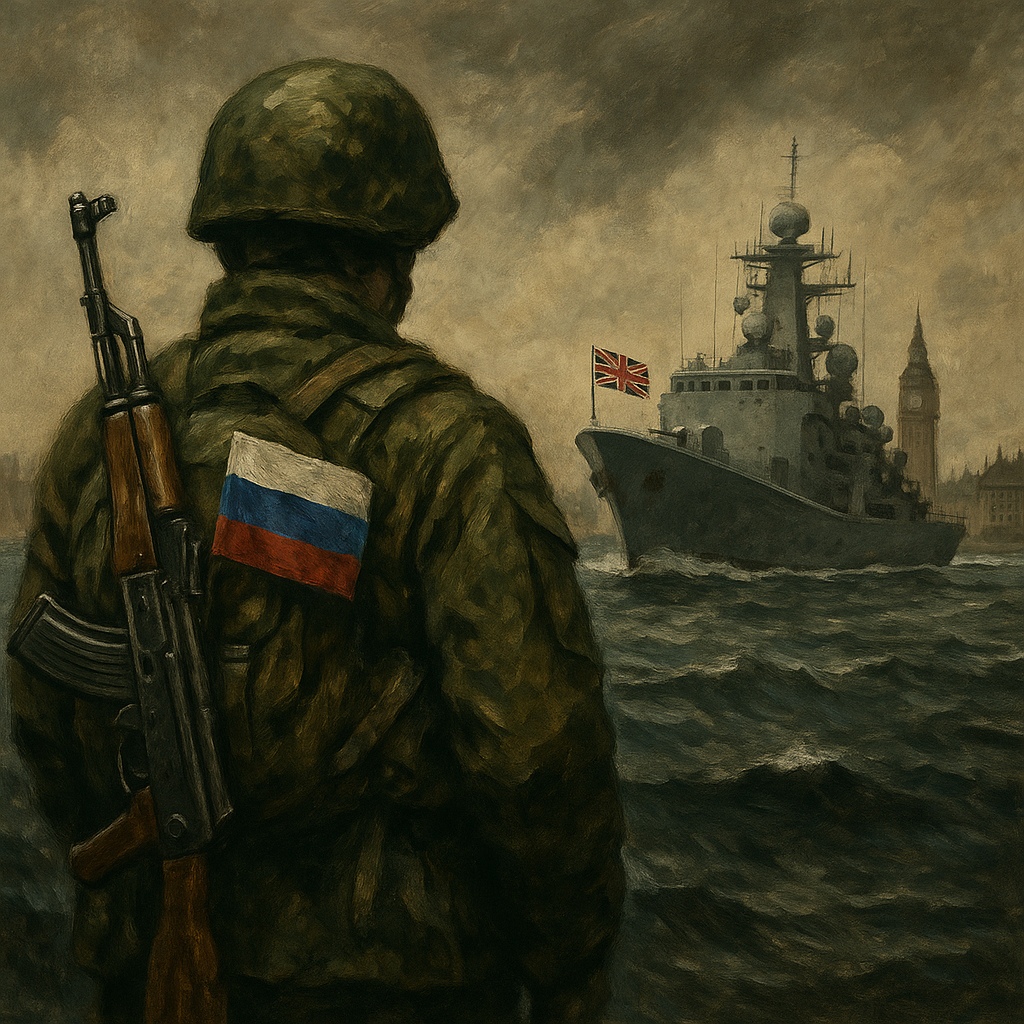
Russia’s busy this week — blowing up tracks in Poland, shouting “Russophobia!” at the microphone, and parking a deep-sea spy ship on the edge of UK waters to stare at undersea cables and lase RAF pilots for fun.
For a country that insists everyone else is “hysterical,” it spends a suspicious amount of time creeping around other people’s infrastructure.
Let’s start on land, then head out to sea.
Poland woke up, looked at a blown-up railway, and basically said: “Enough.”

Warsaw has decided to shut down Russia’s last functioning consulate in the country — the one in Gdańsk — after an explosion on a key railway line that feeds military aid toward Ukraine. Polish Foreign Minister Radosław Sikorski pulled the plug, formally revoking consent for the consulate to operate.
The timing wasn’t subtle. A section of the Warsaw–Lublin line near Mika station was badly damaged when an explosive device went off on the track. This isn’t some sleepy local spur; it’s one of the main arteries for gear headed east. Polish authorities say the blast was deliberate sabotage.
Prime Minister Donald Tusk called it an unprecedented act, and it’s not hard to see why. You hit a freight corridor like that, you’re not just delaying trains; you’re trying to choke Ukraine’s supply line while sending a message to NATO: your rear area isn’t safe either. Polish investigators now say two suspects — both Ukrainian citizens — worked with Russian intelligence and bolted across the border into Belarus almost immediately after the explosion.
So Poland’s response is twofold:
- Security: the army’s been ordered to physically inspect roughly 120 km of track toward the Ukrainian border to make sure no one’s planted any extra “surprises.”
- Political: close the last Russian consulate and signal that, as far as Warsaw’s concerned, relations are basically down to the wires that absolutely have to remain plugged in.
Moscow, of course, is enraged — not about the rail sabotage accusation, but about losing its consulate slot. Kremlin spokesman Dmitry Peskov accused Poland of “Russophobia,” said the decision made no sense, and complained that Warsaw was trying to reduce relations to zero.
The pattern is almost boring at this point:
- Something in or near NATO territory blows up, catches fire, or mysteriously malfunctions.
- Local authorities find traces of foreign involvement and start talking about Russian services.
- Russia denies everything, yells “Russophobia,” and acts deeply injured that anyone could be so rude as to notice the smoke and the scorch marks.
From Poland’s vantage point, this isn’t about being afraid of Russia. It’s about being tired of pretending that sabotage on a main aid route is some weird coincidence. When you’ve already had warehouses burn, cables cut, and networks poked, a bomb on your Ukraine rail lifeline starts to look like step four in a series, not a one-off.
And while the Kremlin complains about the poor consulate, it’s hard to ignore the bigger picture: in practical terms, Russia is the one choosing an adversarial relationship here — you don’t get to run covert operations against a neighbor and then demand full-service diplomatic hospitality on top.
Now spin the map northwest, up to the North Atlantic.
Around the same time Poland was wiring off its tracks and its consulate ties, the UK’s defense secretary went on record about another “totally innocent” Russian presence: the spy ship Yantar, loitering just outside British waters north of Scotland.

John Healey didn’t sugarcoat it. He said Yantar is a vessel built to gather intelligence and map undersea infrastructure — the kind of ship you send if you’re interested in submarine cables, offshore energy, and anything else that lives under the waves and keeps a modern country running.
The UK dispatched a Royal Navy frigate and RAF aircraft to shadow the vessel. During those patrols, British officials say Yantar directed lasers at RAF pilots monitoring its movement — an escalation from just “being in the neighborhood” to actively messing with aircraft sensors and crews. Healey called it dangerous and said London has “military options ready” if the ship turns inward toward the UK coastline.
This isn’t Yantar’s first European tour. The ship is formally classified as an “oceanographic research vessel,” because of course it is. In reality, it’s a flagship of Russia’s Main Directorate of Deep-Sea Research — a military structure dedicated to deep-water intelligence and special operations. It carries crewed and uncrewed submersibles that can dive thousands of meters, approach cables and seabed gear, and either tap them or cut them.
Western navies have been watching this ship for years:
- Off the U.S. coast near Guantánamo.
- Along Norway’s shoreline.
- In the eastern Mediterranean near telecom links and crash sites.
Wherever crucial underwater lines lie, Yantar has a habit of drifting by, “studying the ocean” in the exact same places your internet, energy, and military cables happen to sit.
So when the UK says it’s worried about its seabed infrastructure, it’s not paranoia. Those cables are the quiet veins of the alliance — everything from encrypted military traffic to routine banking data is flowing through them. In a crisis, an adversary doesn’t even need to flatten cities if it can silently sever the pipes that carry your electricity and your communications.
Russia doesn’t have to pull the trigger today. All it has to do is map, measure, and prepare. That’s what worries planners in London, Brussels, and Washington — that one day, during some “unrelated” political showdown, someone in Moscow decides it’s time to start unplugging sections of the Western world from the seabed up.
Seen side by side, the Poland and Yantar stories are not random headlines. They’re two angles on the same playbook.
On land, you get an explosion on a crucial track to Ukraine, followed by a barrage of denials and accusations of bias. At sea, you get a spy ship tiptoeing around British waters with sensors and submersibles, pretending to admire the seabed while quietly logging everything you’d need to damage it later.
In both cases, Russia’s line is essentially: “We’re just minding our own business, and if you’re alarmed, that’s your irrational hatred showing.”
- Poland calls out sabotage, moves to shut a consulate, and prepares to harden its rail lines. Russia replies with “Russophobia” and promises it will downgrade Polish diplomatic access in return.
- The UK tracks a spy ship that’s already aimed lasers at its pilots, and raises its readiness posture around undersea infrastructure. Russia insists Yantar is a research vessel, nothing more.
It’s a neat little trap Moscow tries to set: if you overreact, you’re “hateful and Russophobic.” If you underreact, you leave your infrastructure and logistics open to future pressure or attack. The goal isn’t just to damage a rail line or map a cable; it’s to normalize the idea that Russia gets to poke and prod at allied infrastructure as a matter of routine, and any attempt to push back is an act of hostility.
Poland and the UK, to their credit, don’t seem interested in playing along.
Warsaw is treating the Mika station blast as part of a broader hybrid campaign and is adjusting its posture accordingly: more inspections, more security, fewer illusions about what Russian presence on its territory means. London is no longer shrugging off Yantar as “odd, but whatever.” The defense secretary is openly framing it as a threat to undersea infrastructure and talking about rules of engagement, not just polite maritime tracking.
The subtext is simple:
If Russia wants to behave like an openly hostile actor around NATO’s critical infrastructure, it doesn’t get to hide behind the fiction of normal diplomatic or research activity. You don’t get full-service consulates while your agents are blowing holes in rail lines to a war zone. You don’t get a free pass to “study the seabed” when the entire design of your ship screams cable warfare.
There’s a bigger Ukraine angle too.
Those Polish tracks are one of the ways ammunition, vehicles, and humanitarian cargo reach Ukraine’s border. Attack them, and you’re not just trolling Poland; you’re taking a swing at the arteries that keep Ukraine in the fight. Those undersea cables Yantar loves to hover over? They’re part of the same wider network of connectivity that lets allies coordinate air defenses, share intel, and run the industrial machine behind Ukraine’s resistance.
If there’s one thing this war keeps teaching, it’s that the front line doesn’t stop at the trench. It runs through logistics depots in Poland, data centers in Germany, undersea cables off Scotland, and quiet consular offices in coastal cities — the places where influence, access, and information flow are negotiated and exploited.
So when Russia complains that Poland is “reducing relations to zero,” it’s worth flipping the question around:
What kind of relationship do you realistically expect, when one side is guarding its tracks from your sabotage and the other is shadowing your spy ship as it lasers RAF pilots near their own infrastructure?
That’s not a friendship gone sour. That’s a security problem being labeled accurately.
And Europe, slowly, is starting to act like it.





Leave a Reply